Fund Allocation Trends in Sequential Blackjack and Roulette Play on Tiered Reward Mobile Applications
Taylor Werner · Oct 22, 2026
Fund Allocation Trends in Sequential Blackjack and Roulette Play on Tiered Reward Mobile Applications
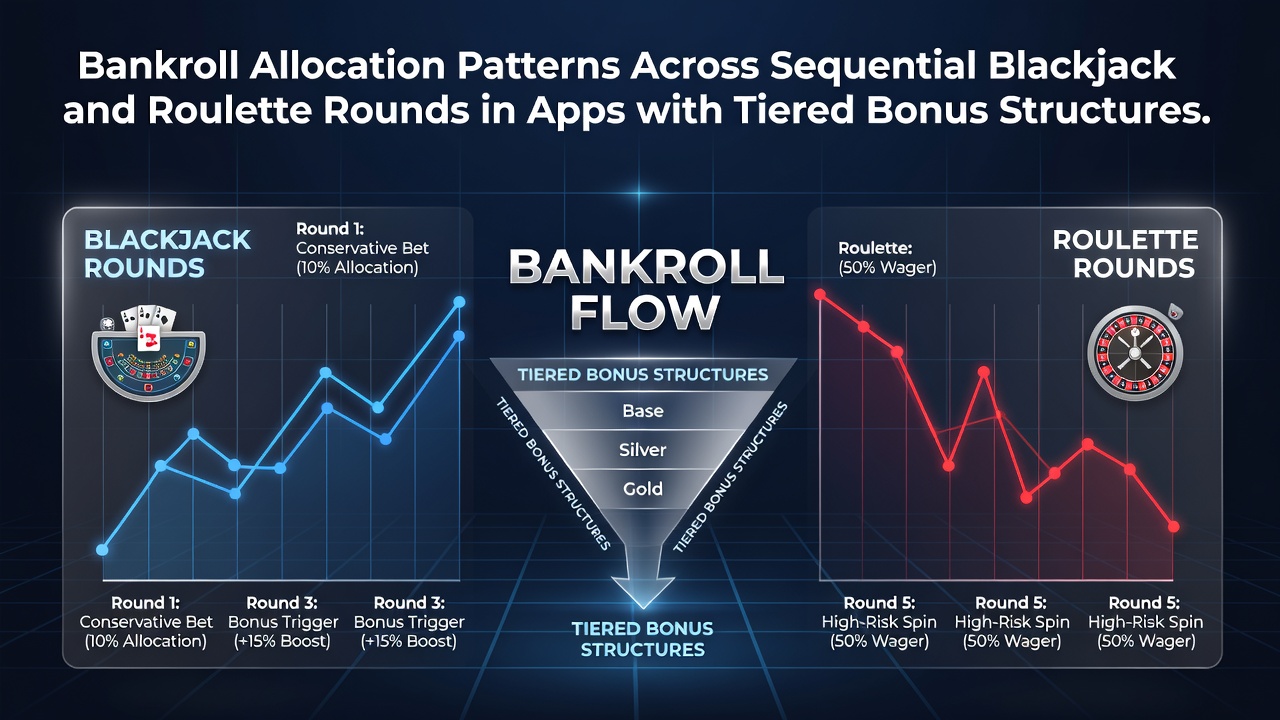
Data from multiple state-regulated platforms shows that players in apps with tiered bonus structures often adjust their bankroll splits when moving between blackjack and roulette rounds in sequence, and researchers have tracked these shifts through session logs collected between 2024 and 2026. Patterns emerge where initial deposits get divided into smaller portions for early rounds, while later allocations grow when bonus multipliers activate after reaching specific tier thresholds. Observers note that this behavior appears consistently across apps that layer rewards based on total rounds played rather than single-game totals.
Observed Shifts in Resource Division
Studies tracking user accounts in October 2026 reveal that many participants begin sessions by reserving roughly 40 percent of their starting balance for blackjack sequences before transitioning to roulette, yet this proportion changes once a second bonus tier unlocks. The remaining funds then redistribute toward roulette rounds because those games trigger faster progress toward the next reward level in several documented systems. Figures from aggregated platform analytics indicate that such reallocations happen within the first 15 to 20 rounds for users who maintain consistent session lengths.
One analysis of multi-state data sets found that players who alternate games every three to five rounds maintain steadier bankroll percentages compared with those who complete longer streaks in a single title. This steadiness holds even when tiered bonuses reset weekly or monthly, according to reports compiled by the New Jersey Division of Gaming Enforcement. Those reports also highlight that apps using progressive multipliers see higher retention rates when users receive visual prompts showing remaining balance needed to reach the next tier.
Influence of Bonus Tiers on Round Sequencing
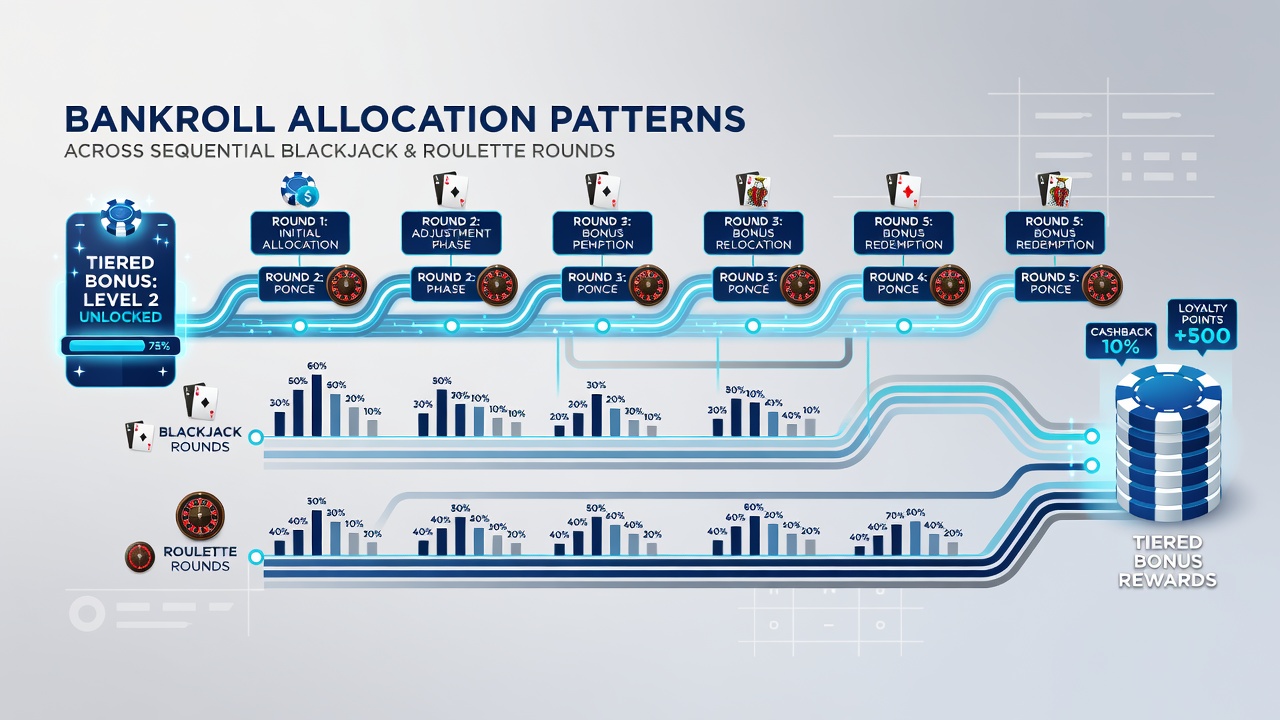
Apps that structure bonuses across multiple levels encourage distinct allocation habits, and evidence from industry monitoring groups shows that the third and fourth tiers often prompt the largest reallocations. Users frequently move larger portions of remaining funds into roulette after blackjack rounds because wheel-based games complete faster and allow quicker accumulation toward the subsequent reward bracket. Data collected through session replay tools indicates these moves occur most often during evening hours when average session duration exceeds 45 minutes.
Researchers at the University of Nevada, Reno have examined how tier progression correlates with fund distribution across consecutive rounds, and their findings point to reduced variance in bet sizing once the second tier activates. Players appear to stabilize their per-round allocations rather than increasing them aggressively, even though higher multipliers become available. This stabilization shows up in logs from both iOS and Android versions of teh same applications.
Regional Regulatory Context and Platform Adaptations
Regulatory updates in various jurisdictions during 2025 and 2026 have required clearer disclosure of how tiered bonuses affect game sequencing, and platforms responded by adding in-app calculators that display projected balance changes. The Australian Communications and Media Authority has published summaries noting that transparent displays correlate with longer but more controlled play sessions in reward-integrated environments. Similar observations appear in Canadian provincial reports covering digital gaming operators licensed in Ontario and British Columbia.
Platform operators have adjusted their algorithms to accommodate these documented patterns, and several now offer optional pre-set allocation templates that users can activate before starting sequential rounds. These templates draw from historical session data showing preferred splits between card-based and wheel-based activities once specific bonus milestones are reached. Evidence suggests the templates reduce abrupt balance swings reported in earlier versions of the same applications.
Conclusion
Tracking of bankroll allocation across sequential blackjack and roulette rounds continues to evolve as apps refine their tiered bonus mechanics, and available data sets from multiple regulatory bodies provide consistent snapshots of how users respond to layered incentives. Continued monitoring through 2026 and beyond will clarify whether current patterns persist or shift further when new reward structures enter the market.